Custom PHP Web Shells With AI Comments Exfiltrate Government Database Credentials in CL-UNK-1211 Campaign
Attackers used AI-assisted code to infiltrate government Linux systems, stealing credentials and exfiltrating database contents during a long-running campaign.
Key points
- The campaign, tracked as CL-UNK-1211, targeted government and state-affiliated infrastructure from October 2025 to April 2026.
- Attackers deployed custom PHP web shells and backdoors that contained AI-generated conversational comments and reasoning notes.
- Threat actors dumped database contents and accessed social media accounts linked to compromised government email addresses.
Government entities and state-affiliated organizations operating on Linux infrastructure are the primary targets of an espionage campaign identified by Palo Alto Networks Unit 42. Researchers tracked this activity, designated CL-UNK-1211, spanning from October 2025 through April 2026. The attackers focused on maintaining persistent access to these systems to conduct extensive reconnaissance and gather intelligence for their operations.
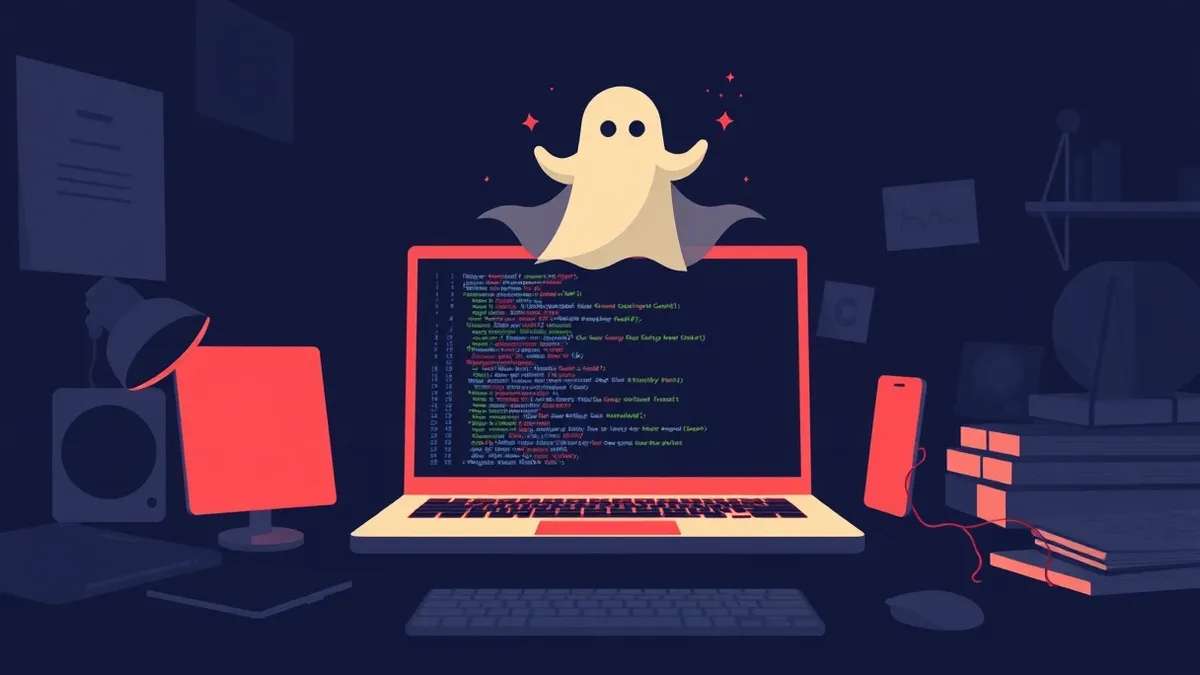
The intrusions relied heavily on AI-generated payloads to streamline the attack workflow. Unit 42 analysts observed that multiple malicious artifacts contained conversational annotations and developer reasoning comments. These specific code structures suggest the malware was either generated using large language models or deployed by automated AI agents. This approach allowed the threat actors to create diverse tools quickly while maintaining a consistent operational playbook across different Linux environments.
Tactics and Techniques
Attackers used a combination of open-source utilities, custom cross-platform backdoors, and widespread web shell deployments to maintain control. They prioritized defense evasion by attempting to disable endpoint protections on compromised systems and erasing system logs to hide their presence. To further disguise their activity, the group planted deceptive red-team markers, making it appear as though the intrusions were legitimate security assessments rather than malicious espionage efforts.
Data Exposure Risks
The campaign’s primary goal was intelligence gathering through data exfiltration. Attackers enumerated mailboxes to identify government email addresses and then accessed social media accounts tied to those emails. In addition to credential harvesting, the group dumped entire database contents before attempting to exfiltrate the stolen information. This methodical approach indicates a focus on extracting high-value sensitive data from enterprise Linux and database environments.
Our take on the response
Unit 42 attributes this activity to CL-UNK-1211, a designation used for clusters where affiliation with nation-state or cybercrime groups remains undetermined. Palo Alto Networks states that its Advanced URL Filtering, Advanced DNS Security, and Advanced IP Defense products help protect customers from these threats. The firm also notes that its AI Security Assessment and Frontier AI Defense services can help identify and mitigate complex AI-enabled risks associated with such campaigns.
For customers and users
Organizations should verify that their Linux servers are not hosting unauthorized PHP scripts or shell files. Security teams usually review system logs for signs of tampering or deletion, as attackers often erase evidence. Check whether endpoint protection services are running correctly on all critical infrastructure. Monitor email accounts linked to government domains for unusual login activity from social media platforms. Be wary of follow-up scams that might claim to offer remediation services after such incidents are reported.
Background: Backdoors
Use this checklist to verify your system integrity. Focus on disabling unused network services, verifying boot integrity, and monitoring for unexpected administrative access. These steps reduce the attack surface where attackers install hidden entry points. Regular audits ensure no unauthorized software remains active on your network.
Read the full guide: Backdoors Prevention Checklist for Securing Systems
What to do and how to stay safe: CL-UNK-1211
- Review server file systems for unexpected PHP or shell scripts, especially those containing unusual comments or reasoning notes.
- Verify that endpoint protection and logging services are active and have not been disabled or tampered with.
- Monitor government email accounts for unauthorized access attempts or logins to linked social media profiles.
- Ensure that web shells are removed from servers once the vendor provides an update or detection signature.
Step-by-step guide: Incident Response Plans: How to Stop Damage When Attacks Happen
General security guidance from the DataSafe Radar newsroom. It is not confirmed advice from the organisations named in this story.
Frequently asked questions
What is CL-UNK-1211?
CL-UNK-1211 is the designation used by Unit 42 for this specific cluster of espionage activity targeting government Linux infrastructure.
How did researchers know AI was used?
Analysts found conversational, step-by-step reasoning notes in the code, which are consistent with output from large language models or automated AI agents.
Is this group linked to a specific country?
No, Unit 42 states that the affiliation of CL-UNK-1211 with either nation-state or cybercrime activity has not yet been determined.