How Children's Online Privacy Risks Work: The Data Collection Chain
Most privacy loss happens before the child sees the screen, driven by silent background data harvesting that builds persistent profiles without consent.

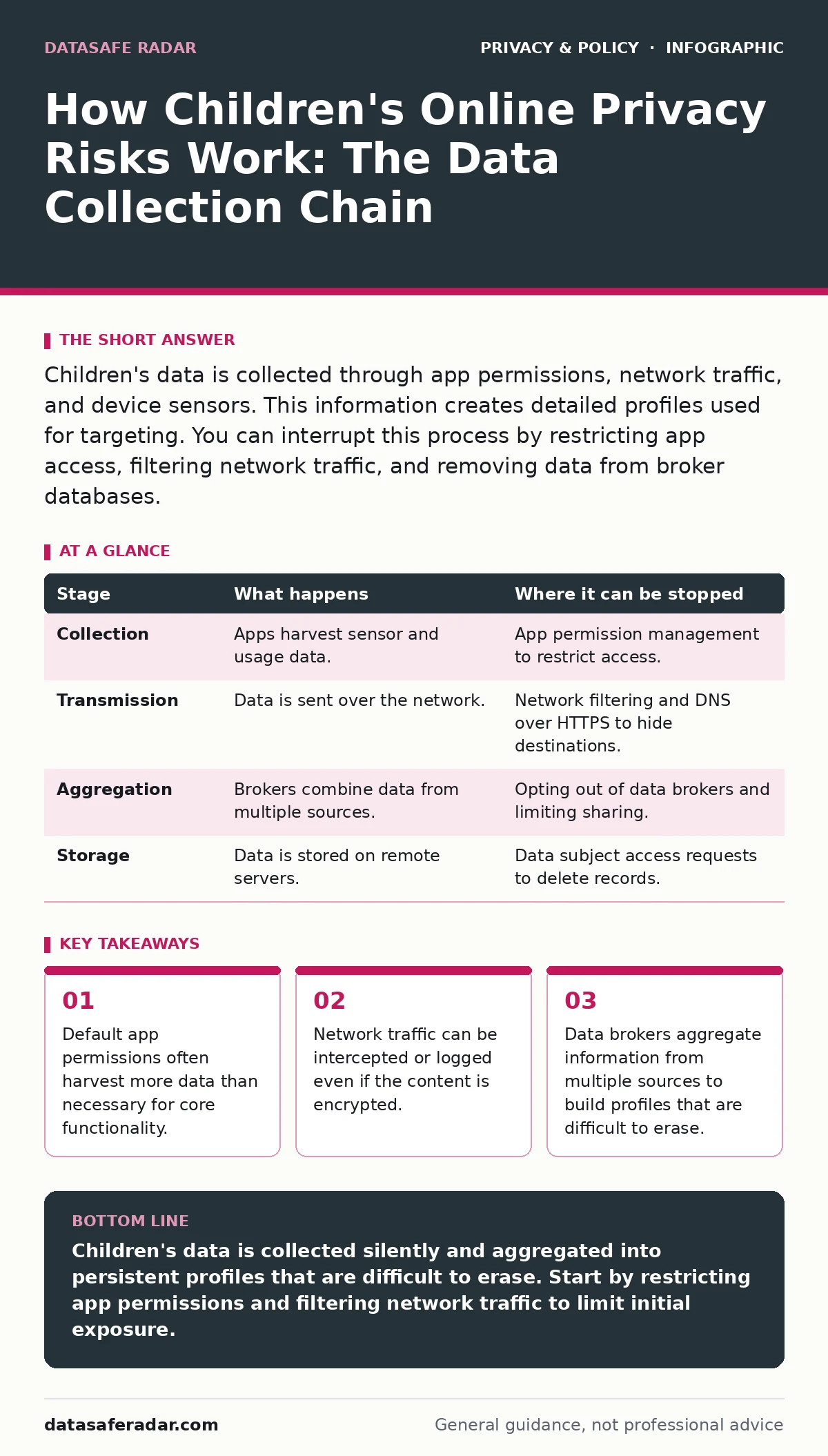
Children's data is collected through app permissions, network traffic, and device sensors. This information creates detailed profiles used for targeting. You can interrupt this process by restricting app access, filtering network traffic, and removing data from broker databases.
The Silent Collection Phase
The risk to a child’s privacy rarely begins with a direct interaction with a malicious actor. It starts with the legitimate services they use. Every app, website, and game asks for permission to access device features. These permissions are the entry points for data collection.
When you install an application, you grant it access to specific hardware sensors. A flashlight app does not need access to your contact list or microphone. However, many applications request broad permissions to maximize data harvesting. This creates a gap between what the app does and what it records.
The app runs in the background, even when the child is not actively using it. It logs location data, device identifiers, and usage patterns. This information is sent to remote servers. The child sees a game or a tool, but the system sees a data stream.
Network Transmission and Logging
Once the data leaves the device, it travels across the internet. This journey is vulnerable to interception and logging. Most modern websites use encryption to protect data in transit. This encryption prevents casual eavesdropping but does not hide the destination of the traffic.
Imagine a child visiting a educational video site. The content is encrypted, so no one can see the video. However, the network provider can see that the child is connecting to that specific site. This metadata reveals interests and habits.
Service providers log this connection data. They record the time, duration, and type of content accessed. These logs are valuable for advertising and profiling. They build a picture of the child’s daily routine and preferences.
Profile Aggregation and Brokerage
The collected data does not stay with the original service. It is often sold or shared with third parties. Data brokers aggregate information from many sources. They combine app data, web browsing history, and public records.
This aggregation creates a detailed profile. The profile includes inferred attributes like socioeconomic status, interests, and behavioral tendencies. These profiles are sold to advertisers and other entities. The child becomes a data point in a larger market.
The sheer volume of data makes it difficult to track where the information goes. A single piece of data, like a location check-in, is combined with other data points to create a comprehensive identity. This identity is used to target the child with specific content or products.
The Persistence of Digital Footprints
Data collected during childhood persists long after the child grows up. Deleting an account does not always delete the data. Copies may exist on backup servers, broker databases, or cached systems.
This persistence creates long-term risks. A profile built on childhood interests can influence future opportunities. It can affect insurance rates, credit scores, and employment prospects. The child has little control over how this data is used later in life.
The lack of consent at the time of collection complicates removal. Children cannot legally consent to data processing in many jurisdictions. However, the data is still collected and stored. This creates a legal and ethical gray area.
Interruption Points in the Chain
You can interrupt the data collection chain at several stages. The most effective point is at the source: the device and the app. By managing permissions, you limit what data can be collected.
Another point is the network. By controlling how the device connects to the internet, you can block or filter traffic. This prevents data from leaving the device in the first place.
Finally, you can address the aggregated data. While difficult, it is possible to request deletion from brokers and services. This requires ongoing effort and vigilance.
| Stage | What happens | Where it can be stopped |
|---|---|---|
| Collection | Apps harvest sensor and usage data. | App permission management to restrict access. |
| Transmission | Data is sent over the network. | Network filtering and DNS over HTTPS to hide destinations. |
| Aggregation | Brokers combine data from multiple sources. | Opting out of data brokers and limiting sharing. |
| Storage | Data is stored on remote servers. | Data subject access requests to delete records. |
Managing App Permissions
The first line of defense is strict permission management. Review each app’s requests before installation. Deny any permission that is not essential for the app’s function.
For example, a calculator app should not need access to your camera or location. If it asks for these, it is likely harvesting data for other purposes. Many operating systems allow you to grant temporary access. Use this feature for apps that only need occasional access.
Regularly audit installed apps. Remove apps that are no longer used. Check for updates that may change permission requests. Be aware that some apps may change their data practices over time.
Controlling Network Traffic
Network controls provide a second layer of protection. By filtering traffic at the router level, you can block connections to known tracking servers. This prevents data from leaving the device even if the app tries to send it.
Using encrypted DNS services can add another layer of privacy. DNS over HTTPS encrypts the domain name requests, preventing your internet provider from seeing which sites you visit. This reduces the metadata available for profiling.
Be cautious with free Wi-Fi networks. These networks often lack encryption and can be easily intercepted. Use a personal hotspot or a trusted network when accessing sensitive services. Avoid logging into accounts on public networks.
Addressing Aggregated Data
Removing data from brokers is challenging but necessary. Many brokers operate in the shadows, collecting data without direct interaction. You must proactively request deletion.
Use data subject access requests to ask services for the data they hold on the child. Review this data to understand what is being collected. Then, request deletion. Follow up to ensure the data is actually removed.
For broader protection, consider opting out of data brokers. This process involves contacting each broker individually to request removal. It is time-consuming, but it reduces the surface area for data aggregation.
Long-Term Privacy Hygiene
Privacy is not a one-time setup. It requires ongoing maintenance. Regularly review privacy settings on all devices and accounts. Update passwords and enable multi-factor authentication.
Educate the child about privacy risks. Teach them to recognize when an app is asking for too much information. Encourage them to question why a service needs certain data.
Stay informed about changes in privacy laws and regulations. These changes can affect how data is collected and stored. Adjust your practices accordingly to maintain protection.
Key takeaways
- Default app permissions often harvest more data than necessary for core functionality.
- Network traffic can be intercepted or logged even if the content is encrypted.
- Data brokers aggregate information from multiple sources to build profiles that are difficult to erase.
Children's data is collected silently and aggregated into persistent profiles that are difficult to erase. Start by restricting app permissions and filtering network traffic to limit initial exposure.
Frequently asked questions
Can I completely stop my child's data from being collected?
No, complete prevention is not possible. However, you can significantly reduce the amount of data collected by managing permissions and network settings.
What is the difference between encryption and privacy?
Encryption protects data from being read during transmission. Privacy controls who can collect and use the data in the first place. Both are needed for full protection.
How often should I review app permissions?
Review permissions every time you install a new app or update an existing one. Conduct a full audit of all apps every few months.
Are data brokers required to delete my child's data?
Laws vary by region. In many places, you can request deletion, but compliance is not always guaranteed. Persistent follow-up is often necessary.
How this guide was produced: written by the DataSafe Radar editorial team with AI assistance, checked against the public references listed below, and reviewed when the facts change. See our editorial policy or report an error.