Online Anonymity for Small Businesses and Practical Privacy Controls
Small companies leak operational patterns because digital anonymity requires masking network traffic metadata, not just hiding names.

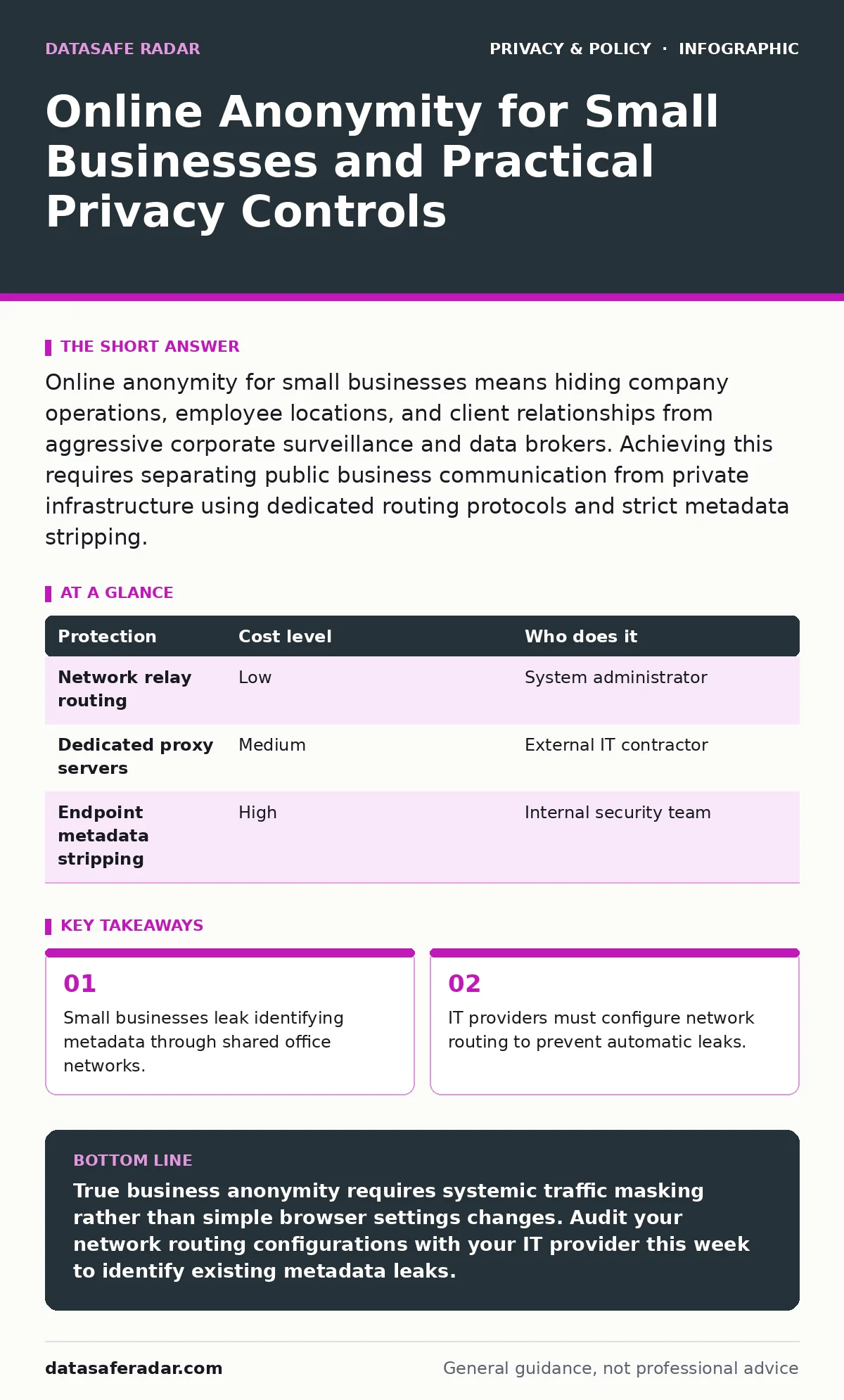
Online anonymity for small businesses means hiding company operations, employee locations, and client relationships from aggressive corporate surveillance and data brokers. Achieving this requires separating public business communication from private infrastructure using dedicated routing protocols and strict metadata stripping.
Why Small Scale Operations Leak Identity
Small businesses leak identity because standard commercial internet connections broadcast physical locations and device registries directly to data brokers. Every outgoing packet carries source routing data that connects your office desk to specific internet service providers. Competitors and malicious actors parse these connection patterns to map your workforce size and daily operational hours. Masking this footprint stops automated crawlers from building behavioral profiles on your enterprise.
What Anonymity Protects and What It Breaks
Enterprise anonymity protects internal research strategies and employee locations from aggressive commercial harvesting operations. Network masking hides your true origin geography, preventing targeted phishing campaigns designed around local infrastructure. Trade-offs arrive immediately because strict traffic routing breaks location-based software licenses and triggers security alerts on banking portals. Financial institutions often flag anonymous connections as fraudulent activity, freezing business accounts until manual identity verification occurs.
Practical Steps for Masking Business Traffic
Small enterprises implement network anonymity by routing operational web traffic through decentralized relay networks or dedicated virtual private servers. Dedicated routing nodes strip metadata headers before data packets reach public web destinations. Employees must separate personal web browsing from company communications to prevent cross-contamination of device identifiers. Managing corporate digital footprints effectively requires regular reviews similar to privacy audits across all connected endpoints.
| Protection | Cost level | Who does it |
|---|---|---|
| Network relay routing | Low | System administrator |
| Dedicated proxy servers | Medium | External IT contractor |
| Endpoint metadata stripping | High | Internal security team |
Managing Public Profiles and Data Brokers
Business owners often overlook public registries that list corporate registration addresses alongside personal residential properties. Data brokers scrape state filing databases and associate executive names with corporate bank accounts within seconds. Removing personal details from public registries stops stalkers and aggressive sales operations from targeting home addresses. Routine checks against people-search sites reveal how much corporate leadership data remains publicly accessible.
Securing Communication Channels Against Eavesdropping
Unencrypted business communications expose corporate negotiation strategies to passive network observers stationed along internet exchange points. Modern messaging tools must enforce end-to-end encryption protocols that prevent intermediary servers from reading message content. Configuring internal communication channels securely ensures proprietary product designs remain confidential during transit across untrusted public networks. Network administrators must verify that email gateways do not append revealing sender metadata to outgoing client correspondence.
See also: Private file sharing services explained for secure transfers · Differential Privacy Example: How Noise Protects Your Data
What to Ask an IT Provider
Small business owners outsourcing technical infrastructure must interrogate vendor routing policies before signing service agreements. Technical vendors often log customer connection metadata by default to simplify troubleshooting routines. Asking direct operational questions ensures your technology partner respects enterprise confidentiality.
- How do you handle outbound connection logging on our primary routers?
- Can you guarantee our business traffic bypasses commercial data harvesting networks?
- What specific protocols do you use to strip device identifiers from outbound packets?
- Do your maintenance routines share diagnostic telemetry with third-party analytics firms?
Hidden Costs of Complete Isolation
Extreme digital isolation imposes heavy operational friction on growing companies that rely on rapid client communication. Customers expect immediate email responses and frictionless portal logins that anonymous routing protocols frequently disrupt. Maintaining total operational obscurity requires dedicated personnel to handle constant authentication challenges and blocked service requests. Balancing privacy with commercial accessibility demands a realistic assessment of your actual threat model rather than chasing absolute invisibility. Organizations building modern digital defenses should also review data privacy policies to ensure compliance with regional regulations.
Key takeaways
- Small businesses leak identifying metadata through shared office networks.
- IT providers must configure network routing to prevent automatic leaks.
True business anonymity requires systemic traffic masking rather than simple browser settings changes. Audit your network routing configurations with your IT provider this week to identify existing metadata leaks.
Frequently asked questions
Can a small business achieve total online anonymity without breaking daily operations?
Complete anonymity remains impossible for operating businesses because commercial banking and client communication require verifiable identities. You can successfully mask operational metadata while maintaining functional communication channels through careful proxy configuration.
Do standard virtual private networks provide sufficient anonymity for enterprise networks?
Consumer virtual private networks merely shift trust from your internet service provider to a private subscription service. Enterprise anonymity requires dedicated routing infrastructure and strict endpoint metadata controls rather than consumer applications.
How often should a small company audit public registries for executive exposure?
Quarterly reviews of public business filings and broker databases prevent unauthorized aggregation of executive home addresses. Automated monitoring services can alert your team whenever new personal records appear alongside corporate data.
Will anonymous routing protocols slow down everyday business file transfers?
Decentralized routing networks introduce latency because data packets travel through multiple relay nodes before reaching destinations. Bandwidth-heavy operations like video conferencing often suffer noticeable performance degradation when forced through anonymous relays.
How this guide was produced: written by the DataSafe Radar editorial team with AI assistance, checked against the public references listed below, and reviewed when the facts change. See our editorial policy or report an error.