Data Brokers Examples: How They Collect and Sell Your Personal Info
Data brokers aggregate your public records and browsing habits into detailed profiles, selling them to advertisers and insurers without your direct consent.
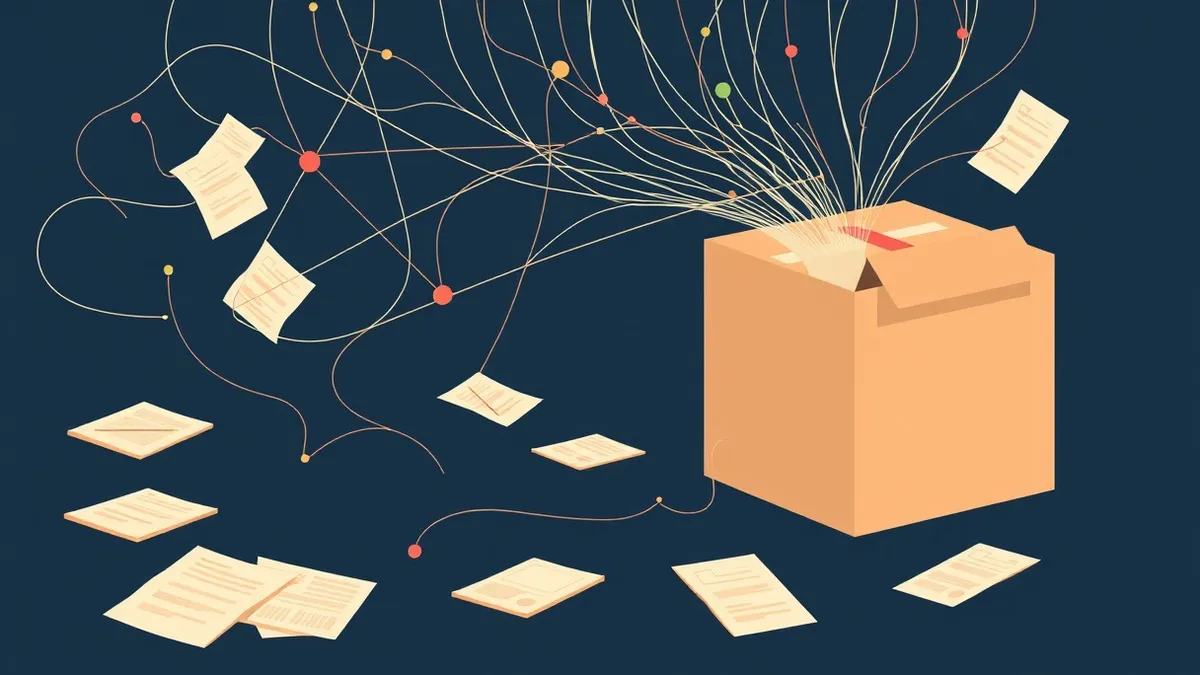
Data brokers are companies that collect personal information from public records, loyalty programs, and online activity. They compile these details into profiles and sell them to marketers, insurers, and other businesses. Common examples include people search engines and consumer research firms. You can opt out of many of these services.
Understanding the Data Broker Model
Imagine a library where the librarians do not just catalog books. They track which books you check out, who you talk to in the parking lot, and what you buy at the nearby store. They then sell this combined report to anyone willing to pay. This is the core function of a data broker. These entities collect vast amounts of personal information from various sources. They aggregate this data to build comprehensive profiles of individuals.
The business model relies on volume and granularity. Brokers do not usually interact with you directly. Instead, they purchase lists from other companies or scrape publicly available records. They combine these datasets to fill in gaps. If one source knows your name and address, and another knows your car model, the broker merges them. The result is a profile that predicts your behavior, health risks, and financial status.
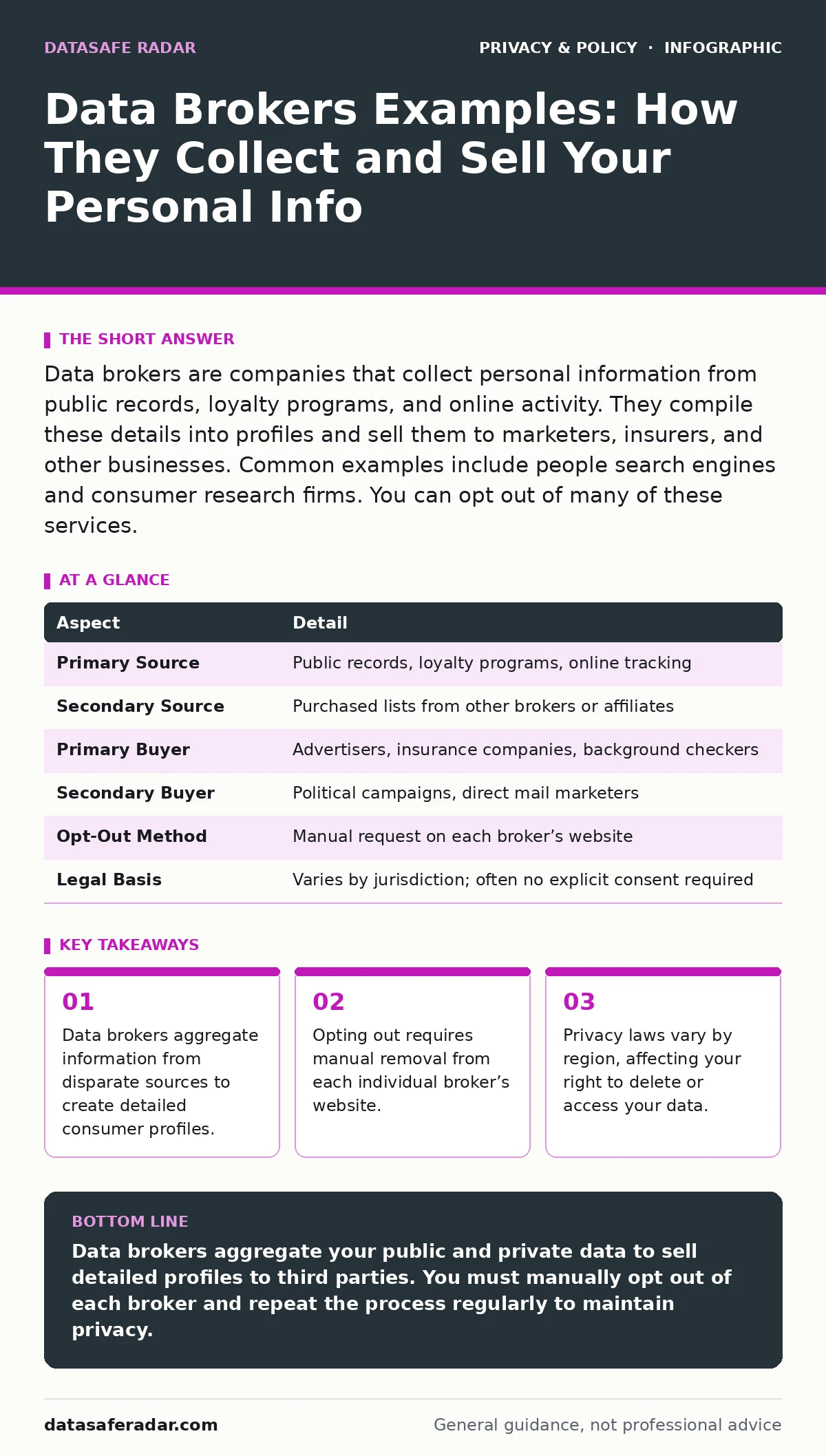
| Aspect | Detail |
|---|---|
| Primary Source | Public records, loyalty programs, online tracking |
| Secondary Source | Purchased lists from other brokers or affiliates |
| Primary Buyer | Advertisers, insurance companies, background checkers |
| Secondary Buyer | Political campaigns, direct mail marketers |
| Opt-Out Method | Manual request on each broker’s website |
| Legal Basis | Varies by jurisdiction; often no explicit consent required |
Data Brokers Examples You Should Know
People searching for data brokers examples often look for specific company names. However, the category is broader than any single vendor. Understanding the types of brokers helps you recognize where your data lives. These categories define the mechanisms of collection and the potential harm.
People search engines are the most visible type. These sites allow anyone to look up a name and find addresses, phone numbers, and relatives. They aggregate court records, voter rolls, and property deeds. Their primary revenue comes from advertising and subscription fees for detailed reports. They do not verify the accuracy of the data, which leads to outdated or incorrect information.
Consumer research firms operate quietly in the background. They collect purchase history and browsing behavior to predict future spending. They sell these insights to retailers and manufacturers. You might see their data in targeted ads that appear after you discuss a product with a friend. They often partner with loyalty programs to track your spending habits across different stores.
Specialty brokers focus on niche datasets. Some track health conditions by analyzing pharmacy purchases. Others monitor financial distress by tracking payday loan applications. These profiles carry higher risk because they reveal sensitive personal details. Insurers and employers sometimes use this data to make decisions about coverage or hiring.
How Data Collection Works in Practice
Data brokers use three main methods to gather information. Understanding these methods reveals why deleting data from one site does not stop the flow. The mechanisms are automated and continuous.
Public records form the foundation of most profiles. Courts, election offices, and property registries publish this information. Brokers scrape these websites regularly to update their databases. This data is legally public, but the aggregation creates a private commodity. You did not consent to having your voting record linked to your property ownership.
Affiliate networks provide another stream of data. Many small websites and apps embed tracking code from data brokers. When you visit these sites, your activity is recorded and sent to the broker. This happens without your explicit knowledge. The website owner earns revenue by sharing your data, while the broker enriches your profile.
Purchase history and loyalty programs are high-value targets. Retailers sell aggregated customer data to brokers. This includes items bought, frequency of visits, and average spend. Brokers use this to infer income levels and lifestyle choices. They combine this with demographic data to create highly targeted segments.
Who Is Affected by Data Brokering
Everyone with a digital footprint or public record is affected. The impact varies based on your online presence and location. Some groups face higher risks than others.
Adults with public records are the primary target. Property owners, voters, and business registrants have data that is easy to access. Brokers use this stable information as an anchor. They then layer on more volatile data like browsing habits. The result is a profile that follows you across different services.
Teenagers and young adults are increasingly affected. Social media activity and app usage generate vast amounts of data. Brokers track this behavior to predict future trends. This data can influence college admissions or job opportunities. Young users often do not understand how their digital footprints are being monetized.
Vulnerable populations face specific risks. Victims of domestic violence rely on anonymity for safety. Data brokers often publish their addresses and phone numbers. This exposure can endanger their lives. Similarly, individuals with medical conditions face discrimination when their health data is sold to insurers or employers.
What People Usually Get Wrong
Many users misunderstand how data brokers operate. These misconceptions lead to ineffective privacy practices. Correcting these beliefs is necessary for real protection.
One common mistake is assuming anonymity online equals privacy. Using a pseudonym on social media does not hide your data from brokers. They link your online activity to your real identity through other means. Your IP address, device fingerprint, or loyalty card number can reveal who you are. The pseudonym becomes just another data point in your profile.
Another error is believing that deleting an account stops data collection. When you delete an account, the service provider may retain your data. They might also sell your final profile to a broker before deletion. The broker then keeps your data indefinitely. You must contact the broker directly to request removal.
Many people think privacy settings on apps are sufficient. These settings control what the app sees, not what third parties see. Brokers use other methods to track you across different apps. They do not rely on a single service’s data. Opting out of one app’s tracking does not remove your data from the broker’s database.
See also: First-Party vs Third-Party Cookies: The Difference and Impact
Steps to Remove Your Data
Removing your data from brokers is a manual process. There is no single button to erase your digital footprint. You must identify the brokers and request deletion individually.
- Identify the brokers holding your data. Search your name on major people search engines. Note the sites that display your information. Use privacy-focused search tools to find additional brokers.
- Visit each broker’s website. Look for privacy policies or opt-out links. These are often hidden in the footer or help sections. Some brokers require you to create an account to request removal.
- Submit your opt-out request. Follow the specific instructions for each site. This may involve uploading a government ID to verify your identity. Keep records of your requests for future reference.
Removing data from one broker does not prevent others from collecting it. New data will appear over time. You must repeat this process periodically. Some regions have laws requiring brokers to delete data upon request. Check your local regulations for additional rights.
Navigating Legal and Technical Limits
Legal frameworks vary significantly by location. Some regions grant strong privacy rights, while others offer minimal protection. Understanding your rights helps you enforce them.
Data privacy laws in certain jurisdictions require brokers to delete data upon request. These laws also mandate transparency about data collection. You have the right to know what data is held and who it was sold to. Exercising these rights requires persistence and documentation.
Technical limits also exist. Brokers may use alternative identifiers to rebuild your profile. Even if you delete your name and address, your device fingerprint or IP address may remain. This makes complete removal difficult. Combining legal requests with technical measures like secure DNS and ad tracking blockers improves your privacy.
Digital privacy rights are evolving. New laws are being proposed to regulate data brokering. Stay informed about changes in your region. Engage with advocacy groups that push for stronger protections. Individual action is necessary, but collective pressure drives systemic change.
Key takeaways
- Data brokers aggregate information from disparate sources to create detailed consumer profiles.
- Opting out requires manual removal from each individual broker’s website.
- Privacy laws vary by region, affecting your right to delete or access your data.
Data brokers aggregate your public and private data to sell detailed profiles to third parties. You must manually opt out of each broker and repeat the process regularly to maintain privacy.
Frequently asked questions
Can I sue a data broker for selling my information?
Legal action depends on your jurisdiction and the specific laws in place. Some regions allow lawsuits for violations of privacy rights, while others do not. Consult a legal professional for advice specific to your case.
Do data brokers sell data to criminals?
Brokers typically sell data to legitimate businesses. However, data breaches can expose this information to criminals. The aggregated nature of the data makes it valuable for identity theft and fraud.
How often should I check for new data brokers?
Check every six months to a year. New brokers emerge, and existing ones update their data. Regular checks help you identify and remove new entries before they are used.
Is it illegal for data brokers to collect public records?
No, collecting public records is generally legal. The controversy lies in the aggregation and sale of this data for commercial purposes. Some regions are introducing laws to restrict this practice.
How this guide was produced: written by the DataSafe Radar editorial team with AI assistance, checked against the public references listed below, and reviewed when the facts change. See our editorial policy or report an error.