Decoding Breach Letters: What Your Company Must Tell You
Breach notification laws require companies to disclose how data was lost, not just that it was lost, giving you specific clues about your personal risk level.
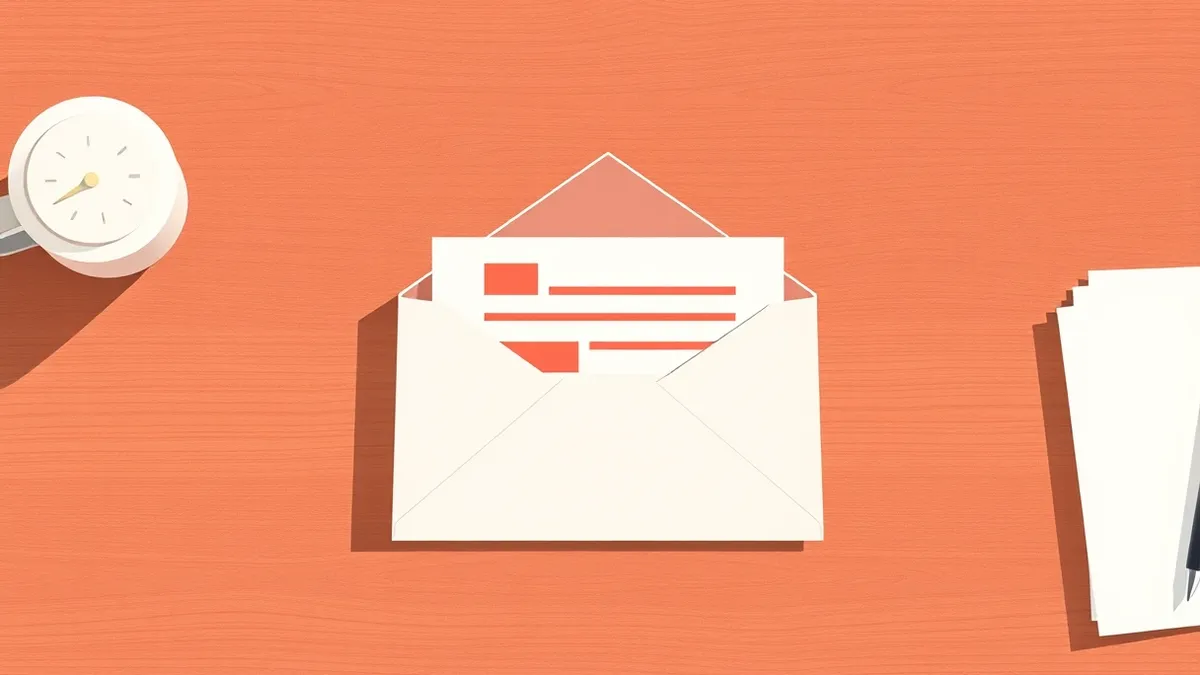
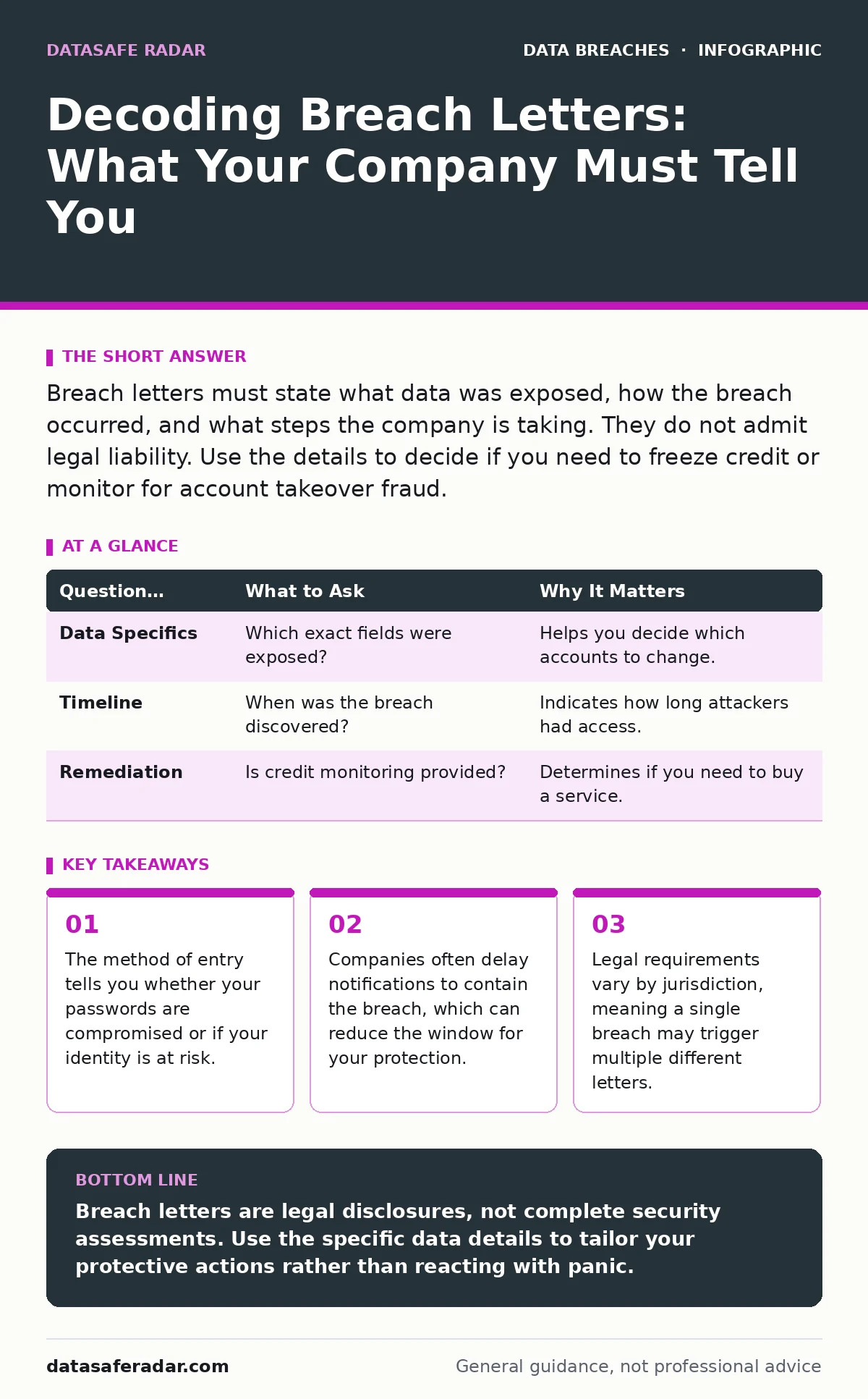
Breach letters must state what data was exposed, how the breach occurred, and what steps the company is taking. They do not admit legal liability. Use the details to decide if you need to freeze credit or monitor for account takeover fraud.
What must a breach notification letter contain?
A breach notification letter must clearly state what happened, what information was involved, and what the organization is doing to respond. You will see a description of the incident, a list of the specific data elements exposed, and contact information for further questions. The letter must also provide steps you can take to protect yourself, such as changing passwords or monitoring financial accounts. This structure is mandated by privacy laws in many regions to ensure transparency.
Why did I receive this letter now?
Companies are legally required to notify you within a specific timeframe after discovering a breach, but that clock starts when they confirm the compromise, not when it occurred. Investigation takes time. Security teams must determine the scope of the breach before they can accurately report it to regulators and customers. This delay is necessary to prevent attackers from knowing exactly what they stole. However, it also means you may have less time to react than you think.
How do I know if my personal data was stolen?
The letter will list the categories of data exposed, such as names, email addresses, or payment card numbers. Look for specific mentions of sensitive identifiers like Social Security numbers or health records. If the letter is vague, your data might still be at risk because the company has not fully mapped the breach. You can cross-reference this with dark web monitoring services to see if your credentials have appeared in public forums.
What is the difference between a data breach and a security incident?
A security incident is any event that threatens information security, while a data breach is a confirmed violation of privacy where unauthorized parties accessed sensitive data. Not every incident results in a breach. For example, a failed hacking attempt is an incident but not a breach if no data was exfiltrated. Companies only send notification letters when a breach has occurred and personal data was compromised.
Does receiving this letter mean I am liable for damages?
No. The letter is a disclosure, not an admission of legal guilt or financial liability. Companies often include legal disclaimers to protect themselves from lawsuits. The purpose is compliance with privacy regulations, not to settle claims. You may still have legal recourse if negligence occurred, but the letter itself does not confirm that.
See also: Private file sharing services explained for secure transfers · Differential Privacy Example: How Noise Protects Your Data
What should I do with the contact information provided?
Use the dedicated hotline or email address to ask specific questions about your account. Do not reply to generic no-reply addresses often found in mass emails. The provided contact method should be a secure channel specifically created for breach-related inquiries. This ensures your questions are handled by personnel trained in incident response.
| Question Category | What to Ask | Why It Matters |
|---|---|---|
| Data Specifics | Which exact fields were exposed? | Helps you decide which accounts to change. |
| Timeline | When was the breach discovered? | Indicates how long attackers had access. |
| Remediation | Is credit monitoring provided? | Determines if you need to buy a service. |
Why are some details missing from the letter?
Companies often omit technical specifics to avoid helping attackers exploit the same vulnerability elsewhere. They may also withhold details pending law enforcement investigation. This balance between transparency and security can make the letter seem incomplete. However, the absence of detail does not mean the risk is low.
How do I protect myself after reading the letter?
Start by changing passwords for any accounts that used the compromised credentials. Enable multi-factor authentication wherever possible to add a layer of security beyond passwords. Monitor your financial statements for unusual activity. If sensitive personal data like your date of birth was exposed, consider placing a fraud alert on your credit reports.
What if I receive multiple letters for the same breach?
Different jurisdictions have different notification requirements, so you may receive separate letters for state and federal compliance. Each letter may contain slightly different information based on local laws. Consolidate the information to get a complete picture of the breach. Do not ignore subsequent letters, as they may reveal new details about the data exposure.
How long will this breach affect me?
The impact lasts as long as the stolen data remains usable to attackers. Passwords can be changed, but static identifiers like your name or address cannot. This means the risk of identity theft persists indefinitely. Regular monitoring of your financial accounts and credit reports is necessary. You may also need to be vigilant against account takeover fraud attempts for years.
Key takeaways
- The method of entry tells you whether your passwords are compromised or if your identity is at risk.
- Companies often delay notifications to contain the breach, which can reduce the window for your protection.
- Legal requirements vary by jurisdiction, meaning a single breach may trigger multiple different letters.
Breach letters are legal disclosures, not complete security assessments. Use the specific data details to tailor your protective actions rather than reacting with panic.
Frequently asked questions
Should I close my bank account after a breach?
Only if the letter states that full banking credentials or PINs were exposed. Changing passwords and monitoring statements is usually sufficient for minor breaches.
How do I verify the breach letter is legitimate?
Check the sender's domain against the official company website. Do not click links; instead, log in to your account directly to check for notifications.
What is credential stuffing?
It is an attack where hackers use leaked username-password pairs from one site to try logging into other sites. This is common after large breaches.
Do I need to change my password if it was unique?
If the breach involved hashed passwords and no other sensitive data, a unique password may be safe. However, changing it is a precautionary best practice.
How this guide was produced: written by the DataSafe Radar editorial team with AI assistance, checked against the public references listed below, and reviewed when the facts change. See our editorial policy or report an error.