How Side-Channel Attacks Work: The Hidden Data Leak
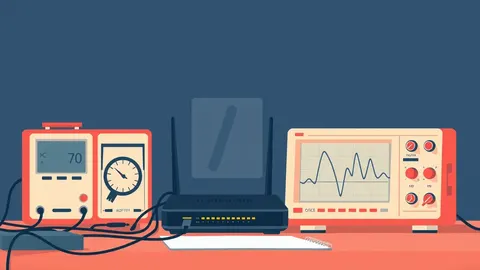
Side-channel attacks bypass encryption by measuring physical traits like power usage or timing, proving that secure code can fail due to hardware behavior.
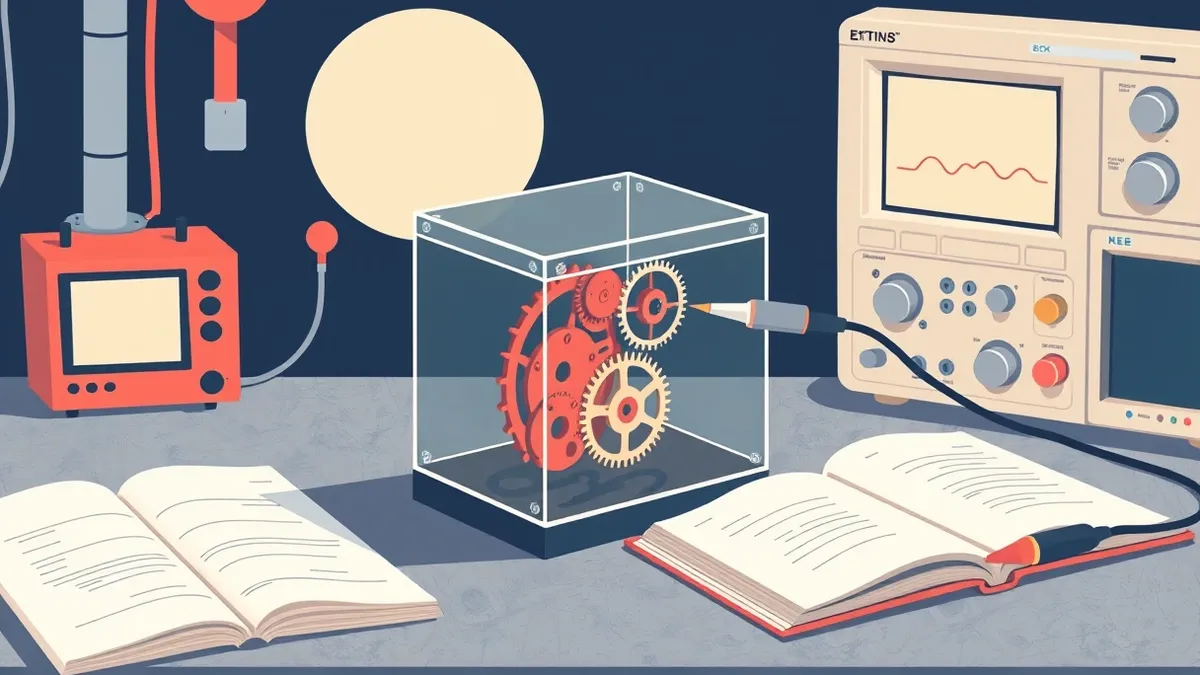
Side-channel attacks steal secrets by observing how a system behaves while processing data. Instead of breaking encryption math, attackers measure power spikes, electromagnetic noise, or time delays. These physical clues reveal private keys because the hardware reacts differently to specific data values during computation.
The Physics of Information Leakage
Encryption relies on mathematical complexity to hide data. It assumes that without the key, the ciphertext is just random noise. This assumption holds true in theory. In practice, the machine running the encryption is made of physical components. These components consume energy, emit heat, and take time to execute instructions. Every operation leaves a trace.
A side-channel attack exploits these traces. It does not attack the algorithm itself. It attacks the implementation of that algorithm on physical hardware. The attacker observes the system while it works. By correlating the observations with the input data, the attacker reconstructs the secret key. This method works because digital logic is not abstract. It is electrical.
Imagine a lock that clicks differently depending on which pin aligns. A burglar does not need to pick the pins. They simply listen to the clicks. Side-channel attacks are the digital equivalent of listening to the lock. The security boundary shifts from the code to the hardware environment.
Stage 1: Selecting the Observable Signal
The attacker begins by identifying what they can measure. They do not need physical access to the chip. They need a signal that changes based on the internal state of the processor. Common signals include power consumption, electromagnetic radiation, execution time, and cache access patterns.
Power analysis is one of the most common methods. Transistors draw more current when switching from zero to one than when staying at one. If the data being processed contains many ones, the power draw spikes. The attacker records these spikes. They look for patterns that repeat when specific key bits are processed.
Timing attacks rely on the fact that some code paths take longer than others. If a function exits early when a guess is wrong, but runs fully when the guess is right, the time difference reveals information. The attacker measures the duration of thousands of operations. They use statistical analysis to separate the signal from the noise.
Stage 2: Crafting the Input Data
Once the signal is chosen, the attacker must control the input. They need to send specific data to the target system to trigger measurable differences. This data is often chosen to maximize the contrast in the side channel.
For a power analysis attack, the attacker might send a series of known plaintexts. They encrypt the same data with the target device. If the device uses a data-dependent operation, the power trace will change based on the secret key and the known plaintext. The attacker varies the plaintext to isolate the effect of the key.
In a timing attack, the attacker sends inputs that force the system to take different branches. They might send a password guess that matches the first character but fails on the second. The system spends more time checking the second character than rejecting the first. This extra time is the clue. The attacker iterates through possible characters, measuring the time for each.
Stage 3: Capturing the Side Channel
The attacker records the observable signal while the target processes the crafted inputs. This requires precise measurement tools. For power analysis, this might be a high-speed oscilloscope connected to the power line. For timing attacks, it might be a high-resolution timer on the attacker's machine.
The quality of the capture determines the success of the attack. Noise from other processes can obscure the signal. The attacker often repeats the operation thousands of times. They average the results to reduce random noise. This statistical approach amplifies the subtle signal caused by the secret key.
Remote attacks are harder to capture. The signal must travel through the air or over a network. Electromagnetic emissions can be picked up with antennas. Network latency can be measured with precise timestamps. The distance and interference reduce the signal strength, requiring more samples and better filtering.
Stage 4: Correlating Signal to Secret
The attacker now has a dataset of inputs and corresponding signals. They need to find the relationship between them. They hypothesize a model of how the hardware behaves. For example, they might assume that power consumption depends on the Hamming weight of the intermediate data. The Hamming weight is the number of one-bits in a binary string.
The attacker tests every possible key guess. For each guess, they simulate the internal state of the cryptographic algorithm. They calculate the expected signal for that state. They then compare this expected signal to the actual measured signal. If the correlation is high, the key guess is likely correct.
This process is computationally intensive. It requires significant processing power and storage. However, it is feasible for modern attackers. Once the correlation peaks for a specific key byte, the attacker knows that byte of the secret key. They repeat this for each byte until the entire key is reconstructed.
See also: Shoulder Surfing Meaning: How Observers Steal Data in Plain Sight · GitHub Actions Workflow Injection Explained: Risks and Fixes
Stage 5: Validating the Key
The attacker does not stop when the correlation peaks. They must verify the key. They use the reconstructed key to decrypt a known ciphertext. If the result is the expected plaintext, the key is correct. This step confirms that the side-channel analysis was successful.
Validation also helps refine the attack. If the key fails, the attacker adjusts their model. They might account for noise sources they missed. They might change the input strategy. Iterative refinement is common in side-channel attacks. The goal is to minimize the number of measurements needed.
This stage proves that the attack is not theoretical. It demonstrates practical access to the secret. The attacker can now decrypt past communications or impersonate the system. The breach occurs without exploiting a software bug. It exploits the physical reality of computation.
Interrupting the Attack Chain
Side-channel attacks can be stopped at several stages. The most effective defense is to remove the signal. Constant-time programming ensures that code execution time does not depend on secret data. This prevents timing attacks.
Masking techniques hide the relationship between data and power consumption. They add random noise to the intermediate values. This makes it harder to correlate the signal with the key. Hardware design can also help. Using power regulators that smooth out consumption spikes reduces the information available to the attacker.
Physical shielding blocks electromagnetic emissions. This prevents remote attacks. Monitoring for unusual power patterns can detect ongoing attacks. These measures add cost and complexity. They must be balanced against the security needs of the system.
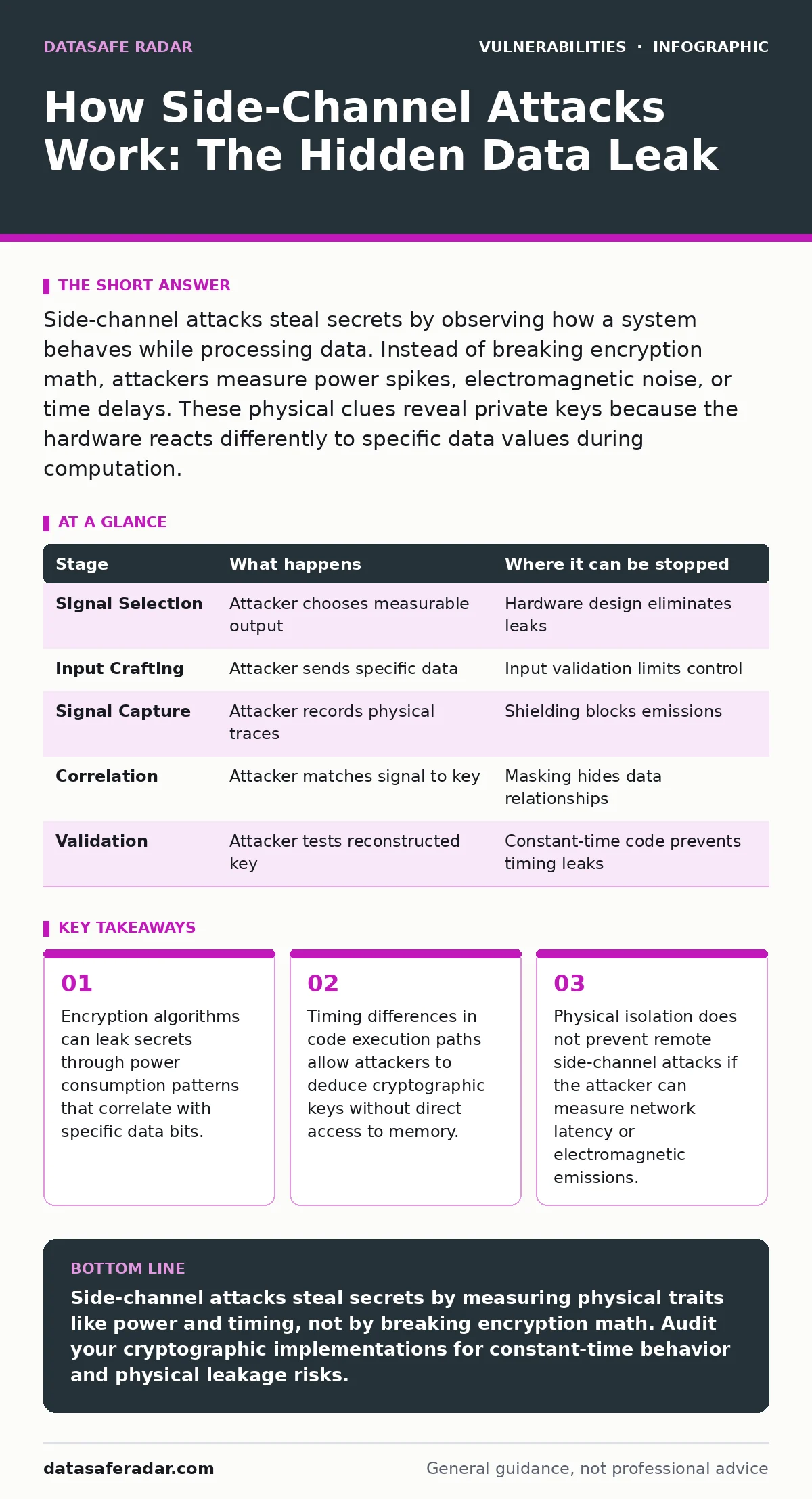
| Stage | What happens | Where it can be stopped |
|---|---|---|
| Signal Selection | Attacker chooses measurable output | Hardware design eliminates leaks |
| Input Crafting | Attacker sends specific data | Input validation limits control |
| Signal Capture | Attacker records physical traces | Shielding blocks emissions |
| Correlation | Attacker matches signal to key | Masking hides data relationships |
| Validation | Attacker tests reconstructed key | Constant-time code prevents timing leaks |
The Hidden Cost of Secure Code
Writing secure code is not enough. You must write constant-time code. This means every branch must take the same amount of time. Every operation must consume the same power. This is difficult to achieve. Compilers may optimize code in ways that introduce timing variations.
Developers often overlook these physical leaks. They focus on logic errors. They assume encryption is a black box. This mindset leaves systems vulnerable to side-channel attacks. Understanding these attacks changes how you view security. It shifts the focus from code to hardware behavior.
Related concepts like vulnerability prioritization help you decide where to apply these expensive defenses. Not every system needs military-grade side-channel protection. Assess the risk based on the value of the data. Default credentials are an easier target for most attackers. Fix those first. But if you handle sensitive keys, side-channel risks are real.
The Broader Security Context
Side-channel attacks highlight the complexity of modern security. They show that isolation is not absolute. Data can leak through physical channels. This requires a holistic approach to defense. You must consider the entire stack, from silicon to software.
Other vulnerabilities, like path traversal vulnerabilities or LDAP injection, exploit software logic. Side-channel attacks exploit physical implementation. Both are dangerous. They require different detection methods. Traditional scanners cannot find side-channel leaks. Specialized testing is needed.
IoT device vulnerabilities often include side-channel risks. These devices have limited processing power. They cannot run heavy masking algorithms. They are also physically accessible. This makes them prime targets for power analysis. Designers must prioritize hardware security from the start.
Business logic flaws are harder to automate testing for. Side-channel attacks are even harder. They require deep knowledge of the hardware. This makes them less common than simple bugs. But they are more persistent. Once a leak is found, it is hard to patch without redesigning the hardware.
EPSS score and CVSS score help rate software vulnerabilities. They do not capture side-channel risks. These scores focus on exploitability and impact. Side-channel attacks have high impact but variable exploitability. You must assess them separately.
The Reality of Physical Security
You cannot hide all signals. Physics imposes limits. There will always be some leakage. The goal is to make the leakage too noisy to use. You must increase the cost of the attack. Make it require too much time, too much money, or too much physical access.
Defenses are not perfect. They add overhead. They slow down systems. They increase power consumption. You must weigh these costs against the risk. For most applications, standard encryption is sufficient. For high-security targets, you need specialized hardware and rigorous testing.
Understanding side-channel attacks changes your perspective. You see the machine, not just the code. You respect the physical limits of computation. This awareness makes you a better defender. It helps you spot weaknesses that others miss.
Key takeaways
- Encryption algorithms can leak secrets through power consumption patterns that correlate with specific data bits.
- Timing differences in code execution paths allow attackers to deduce cryptographic keys without direct access to memory.
- Physical isolation does not prevent remote side-channel attacks if the attacker can measure network latency or electromagnetic emissions.
Side-channel attacks steal secrets by measuring physical traits like power and timing, not by breaking encryption math. Audit your cryptographic implementations for constant-time behavior and physical leakage risks.
Frequently asked questions
Can side-channel attacks be performed remotely?
Yes, attackers can measure network latency or electromagnetic emissions from a distance, though the signal is weaker and harder to isolate.
Do all encryption algorithms have side-channel vulnerabilities?
The algorithms are mathematically secure, but their implementation on hardware often leaks information through power or timing variations.
How do I test for side-channel vulnerabilities?
You need specialized hardware like oscilloscopes and statistical analysis tools, as traditional software scanners cannot detect physical leaks.
Does air-gapping a device stop side-channel attacks?
No, electromagnetic emissions can still travel through the air, allowing remote attackers to capture signals without physical connection.
How this guide was produced: written by the DataSafe Radar editorial team with AI assistance, checked against the public references listed below, and reviewed when the facts change. See our editorial policy or report an error.